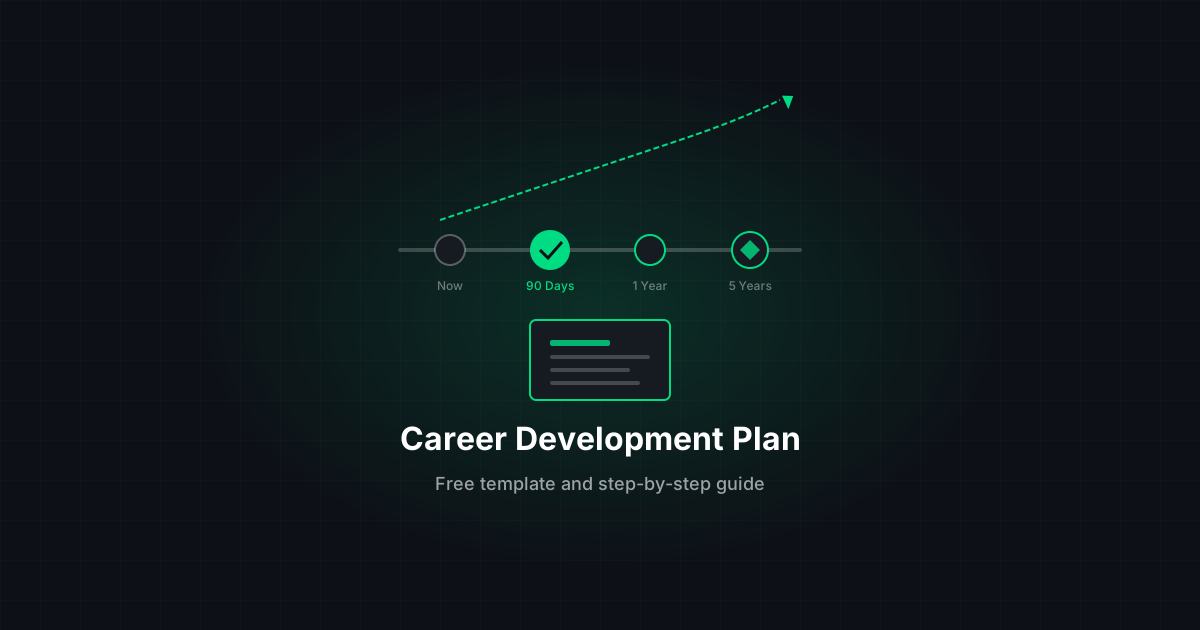
Career Development Plan: Free Template & Guide for 2026
Create your career development plan with our free template and proven framework. Set goals, build skills, and advance your career with this step-by-step guide.
What Is a Career Development Plan and Why You Need One
A career development plan — a tool that SHRM recommends for long-term professional growth transforms vague career aspirations into concrete action. It's the difference between hoping for advancement and engineering it. Without a plan, careers drift—reactive to opportunities that appear rather than proactive toward goals that matter.
The most successful professionals treat career development like a project: defined objectives, clear milestones, regular reviews, and course corrections based on results. A career development plan provides this structure. It answers three essential questions:
- Where am I now? (Current state assessment)
- Where do I want to be? (Goal definition)
- How will I get there? (Action plan)
This guide walks you through creating your career development plan with a proven framework. You'll find templates, examples, and specific tactics to accelerate your career growth in 2026 and beyond. Need additional support? Explore our career counseling guide for personalized guidance options.
The 5-Part Career Development Plan Framework
Part 1: Current State Assessment
Before plotting your destination, understand your starting point.
#### Professional Inventory
Skills Audit
List your skills across three categories:
| Technical Skills | Transferable Skills | Self-Management Skills |
|-----------------|--------------------|-----------------------|
| Programming languages | Communication | Time management |
| Software proficiency | Leadership | Adaptability |
| Industry certifications | Problem-solving | Stress management |
| Domain expertise | Project management | Self-motivation |
Rate each skill:
- Proficiency level (1-5): How good are you?
- Enjoyment level (1-5): How much do you like using it?
- Market value (1-5): How much do employers pay for it?
High scores across all three identify your power skills—the foundation of your career development plan.
Experience Summary
Document your career trajectory:
- Major roles and responsibilities
- Significant accomplishments (quantified)
- Projects that stretched your abilities
- Challenges overcome
- Recognition received
This inventory becomes raw material for your resume and interview stories while revealing patterns in your career.
360 Feedback Collection
Gather external perspectives:
- What do colleagues say you excel at?
- What feedback have managers given?
- What do clients or customers appreciate most?
- What blind spots might you have?
Self-assessment has limits. External input reveals strengths you undervalue and weaknesses you overlook.
#### Values Clarification
Career satisfaction depends on alignment with your values. Rank these from most to least important:
- Compensation / Financial security
- Work-life balance / Flexibility
- Impact / Making a difference
- Autonomy / Independence
- Recognition / Status
- Learning / Growth
- Security / Stability
- Creativity / Innovation
- Leadership / Influence
- Collaboration / Community
Your top 5 values should guide career decisions. A role that pays well but violates your core values leads to burnout.
#### Current Role Analysis
Assess your current position:
- Satisfaction: How content are you (1-10)?
- Growth: Are you learning and developing?
- Compensation: Are you paid fairly for your market value?
- Trajectory: Where does this role lead?
- Fit: Does it align with your values and interests?
This analysis clarifies whether your career development plan focuses on advancing within your current path or pivoting to something new.
Part 2: Goal Setting
Effective career development plans include goals at three time horizons.
#### Long-Term Vision (5-10 Years)
Where do you ultimately want to be? Think about:
- Role: What position or title?
- Industry: What sector or field?
- Impact: What contribution are you making?
- Lifestyle: What does your work-life look like?
- Compensation: What level of income?
Write a vivid description of your ideal professional life. This vision anchors your shorter-term goals.
Example Long-Term Vision:
"In 10 years, I'm a VP of Product at a climate tech company, leading a team of 20+ product managers. I'm known in the industry for sustainable product development and regularly speak at conferences. I work remotely with flexibility to travel, earning $300K+ total compensation. My work directly contributes to carbon reduction solutions."
#### Medium-Term Goals (2-3 Years)
What milestones move you toward your vision? Medium-term goals are specific and measurable.
SMART Goal Framework:
- Specific: Clear and well-defined
- Measurable: Quantifiable progress indicators
- Achievable: Realistic given your starting point
- Relevant: Aligned with long-term vision
- Time-bound: Clear deadline
Example Medium-Term Goals:
- Promoted to Senior Product Manager within 18 months
- Complete Product Management certification by Q2
- Build network of 50+ climate tech professionals by year end
- Lead a product launch generating $5M+ revenue
- Develop expertise in sustainable product practices
#### Short-Term Objectives (90 Days)
What can you accomplish in the next quarter? Short-term objectives create momentum.
90-Day Planning Questions:
- What single accomplishment would most advance my career?
- What skill should I develop this quarter?
- What relationship should I build or strengthen?
- What visibility opportunity should I pursue?
- What obstacle should I remove?
Example 90-Day Objectives:
- Complete first two modules of PM certification
- Have informational interviews with 5 climate tech PMs
- Propose and lead one cross-functional initiative at work
- Update resume and LinkedIn to reflect current achievements
- Request 360 feedback from 5 colleagues
Part 3: Gap Analysis
Compare your current state to your goals. What's missing?
#### Skills Gaps
| Required Skill | Current Level | Target Level | Gap |
|---------------|--------------|--------------|-----|
| Data analytics | 2 | 4 | High |
| Executive presence | 3 | 5 | Medium |
| Sustainability knowledge | 1 | 4 | High |
| Team leadership | 3 | 5 | Medium |
#### Experience Gaps
What experiences do your target roles require that you lack?
- Managing larger teams
- P&L responsibility
- Cross-functional leadership
- Industry-specific experience
- Customer-facing work
#### Credential Gaps
What qualifications do target roles typically require?
- Degrees or certifications
- Industry licenses
- Professional memberships
- Published work or speaking
#### Network Gaps
Who do you need to know?
- Decision-makers at target companies
- Industry thought leaders
- Peers at your target level
- Mentors with relevant experience
Part 4: Action Plan
Convert gaps into specific development activities.
#### Development Strategies
Prioritize developing high-paying skills that align with your goals and market demand.
Formal Learning
- Courses and certifications
- Degree programs
- Workshops and seminars
- Professional reading
Experiential Learning
- Stretch assignments at work
- Project leadership opportunities
- Cross-functional rotations
- Side projects and consulting
Social Learning
- Mentorship (giving and receiving)
- Professional communities
- Peer coaching
- Industry events
Self-Directed Development
- Reflection and journaling
- Feedback seeking
- Personal experiments
- Content creation
#### The 70-20-10 Framework
Research suggests optimal development combines:
- 70% challenging experiences and assignments
- 20% relationships and feedback
- 10% formal training and coursework
Design your plan accordingly. Courses alone won't develop capabilities—you need real application.
#### Sample Action Plan Table
| Goal | Action | Timeline | Resources | Success Metric |
|------|--------|----------|-----------|----------------|
| Build data skills | Complete SQL course | Q1 | DataCamp, 5 hrs/week | Course certificate, use in project |
| Expand network | Attend 2 industry events | Monthly | Conference budget, time | 10 new meaningful connections |
| Increase visibility | Propose innovation project | Q1 | Manager support | Project approved and launched |
| Develop leadership | Request 2 direct reports | Q2 | Manager conversation | Team expansion approved |
Part 5: Review and Accountability
A career development plan without review becomes shelf-ware. Build accountability into your system.
#### Quarterly Reviews
Every 90 days, assess:
- Progress: What did I accomplish toward my goals?
- Learning: What worked? What didn't?
- Adjustments: What should I do differently?
- Next quarter: What are my priorities for the next 90 days?
#### Accountability Partners
Share your plan with:
- Manager: Align on development that benefits both you and the organization
- Mentor: Gain experienced perspective and guidance
- Peer: Create mutual accountability and support
- Coach: Get professional guidance and accountability
#### Metrics to Track
Leading Indicators (predict future success):
- Learning activities completed
- Network connections made
- Skills practiced
- Feedback received
Lagging Indicators (confirm past success):
- Promotions earned
- Compensation increases
- Responsibilities expanded
- Goals achieved
Career Development Plan Template
Use this template to create your own plan:
---
My Career Development Plan
Date Created: _____________
Review Date: _____________
#### Section 1: Current State
My top 5 skills:
1.
2.
3.
4.
5.
My core values:
1.
2.
3.
4.
5.
Current role satisfaction (1-10): _____
What's working well:
What I want to change:
---
#### Section 2: Goals
10-Year Vision:
In 10 years, I am...
3-Year Goals:
1.
2.
3.
90-Day Objectives:
1.
2.
3.
---
#### Section 3: Gap Analysis
Skills to develop:
| Skill | Current | Target | Priority |
|-------|---------|--------|----------|
| | | | |
| | | | |
| | | | |
Experiences needed:
1.
2.
3.
Network gaps:
1.
2.
3.
---
#### Section 4: Action Plan
This Quarter's Priorities:
| Action | Deadline | Resources Needed | How I'll Measure Success |
|--------|----------|------------------|-------------------------|
| | | | |
| | | | |
| | | | |
Accountability:
- I will review this plan with: _____________
- My next review date: _____________
---
Career Development Plan Examples by Career Stage
Entry-Level Example
Current State: Junior Marketing Associate, 1 year experience
3-Year Goal: Senior Marketing Manager
Gap Analysis:
- Need campaign management experience
- Need analytics skills
- Need to build industry network
90-Day Actions:
- Complete Google Analytics certification
- Volunteer to support senior manager's campaign
- Join marketing professional association
- Update resume monthly with new accomplishments
Mid-Career Example
Current State: Software Engineer, 6 years experience
3-Year Goal: Engineering Manager
Gap Analysis:
- Limited people management experience
- Need business acumen development
- Need visibility with leadership
90-Day Actions:
- Request to mentor a junior engineer
- Enroll in management fundamentals course
- Present technical work to leadership monthly
- Have career conversation with skip-level manager
Career Change Example
Current State: Teacher, 8 years experience
3-Year Goal: Corporate Trainer/Learning Designer
Gap Analysis:
- Need corporate experience
- Need instructional design credentials
- Need corporate network
90-Day Actions:
- Start instructional design certificate program
- Volunteer for corporate training project (nonprofit)
- Join ATD (Association for Talent Development)
- Conduct informational interviews with 10 L&D professionals
- Build resume highlighting transferable skills
Common Career Development Plan Mistakes
1. Setting Vague Goals
Wrong: "Get better at leadership"
Right: "Lead a 5-person project team to successful launch by Q3, receiving positive feedback from 80%+ of team members"
2. Over-Planning, Under-Doing
A perfect plan you don't execute is worthless. Start with a good-enough plan and refine through action.
3. Ignoring Market Reality
Your goals must account for market demand. Wanting a role that's declining or doesn't exist creates frustration. Use career guidance resources and research before committing to a direction.
4. Neglecting the "How"
Goals without action plans are wishes. Every goal needs specific next steps, timelines, and resources.
5. Going Solo
Career development in isolation misses opportunities for support, accountability, and serendipity. Share your plan and involve others.
6. Never Reviewing
A plan created and forgotten provides no value. Schedule quarterly reviews as non-negotiable calendar appointments.
Integrating Your Career Development Plan With Your Job
The Development Conversation
Request a dedicated career development discussion with your manager (separate from performance reviews):
Conversation Framework:
- Share your career aspirations (appropriately filtered)
- Ask about development opportunities within the organization
- Discuss how current role can support your development
- Request specific support (projects, mentorship, training budget)
- Agree on check-in frequency
Stretch Assignments
The fastest development happens through challenging work:
- Volunteer for cross-functional projects
- Take on responsibilities outside your job description
- Lead initiatives that increase your visibility
- Accept assignments that scare you slightly
Building Your Portfolio
Document accomplishments as they happen:
- Keep a "wins" folder with achievements
- Update your resume quarterly
- Collect feedback and testimonials
- Build evidence for your next opportunity
Take Action on Your Career Development Plan
A career development plan only creates value through implementation. Start with these steps:
- Complete your self-assessment using the framework in Part 1
- Define your 10-year vision and work backward to 90-day goals
- Identify your top 3 gaps and create specific action plans
- Schedule your first quarterly review and find an accountability partner
- Update your resume to reflect where you're heading, not just where you've been
Your resume is the public expression of your career development plan. It should tell the story of intentional growth toward clear goals. Browse resume examples in your target field to see how successful professionals position their career progression.
When you're ready to make a move, our job search strategy guide provides a complete playbook for executing your plan.
Career development isn't something that happens to you—it's something you create. Your plan is the blueprint. Start building today.
Related Resources
Build your resume now with our AI-powered resume builder.
Bereit, Ihren Lebenslauf zu erstellen?
Setzen Sie diese Tipps mit unserem KI-gestützten Lebenslauf-Builder in die Tat um.
Lebenslauf jetzt erstellen